


%20(1).png)
Middle Grade Sidekick Super Review: Louder Than Hunger (2024) by John Schu

The Basics
Page Length: 528
Audiobook Length: ~3.75 hours
Grade Reading Level: 4+
Target Audience Age: 10-14+ (I would suggest even older than this)
Goodreads Score: 4.40 out of 5
Buy it HERE
Setting: Contemporary American Midwest
Genre: Middle Grade, Contemporary Verse Novel
Topics: Death, Grief, Bullying, Mental Illness, Eating Disorders, Body Image, Therapy, Recovery, Friendship
Plot: Thirteen-year-old Jake has a voice inside his head—one that tells him he’s eating too much, that he needs to exercise more, that he’s worthless, and that he needs to become smaller in every way.
That voice is fueled by the ones he hears at school: the bullies who call him a freak. Jake feels like he only has one true friend—his grandma. Every weekend with her is filled with delicious treats, favorite musicals, and trips to the library. But when his parents admit him to a residential treatment facility for mental illness, those weekends with Grandma suddenly come to an end.
While receiving treatment for anorexia, Jake must learn how to silence the voice in his head, cope with grief and the struggles in his life in healthier ways, and discover what it truly means to make friends—and be a friend. It’s a beautiful and honest story about overcoming mental illness, learning to love yourself, and finding the strength to move forward.
Themes: Mental illness and recovery, overcoming grief from loss, bullying and isolation, connection to family/friends/support systems, passion as motivation for healing, hope and resilience
You might like this book if you like:
Journaling/reflective/introspective writing
Poetry
Theatre/Acting
Books like: Lighter Than My Shadow, The Art of Starving, Darius the Great is Not Okay, The Poet X, Me: Moth, Letting Ana Go, Worthy of Love
Shows like: Heartstopper, My Mad Fat Diary, Atypical, In My Skin, Anne with an E
Movies like: The Perks of Being a Wallflower (also a book), The Way Way Back, A Silent Voice, Bridge to Terabithia (also a book)
Other books written by this author: No other YA or middle grade books yet, BUT one is on the way: P.S. Are We Friends Now?
Teaching Louder Than Hunger in Class
Content
Language: Very little and mild
Sex/Romance: None
Violence/Scariness: There is lots of bullying at school. Death of a close family member. The main character is admitted into a residential treatment facility. Mental health issues are discussed. Suicidal thoughts are alluded to.
Drinking/Smoking/Drugs: The main character is prescribed medication for OCD. His dad smokes
Class Novel-ability:
Because of the topics discussed in the book, I don’t think it would work well as a whole-class novel. BUT, I do think it’s one all teachers should know about. First, I think many students would connect with it and possibly benefit from reading about someone their age dealing with an eating disorder. Second, the structure is incredibly well done. It’s written in verse, and Schu uses the format beautifully for middle grade readers. I think you could pull SO many mentor texts from this book for writing lessons.
The Star Qualities
This book is semi-autobiographical, and the author, John Schu, includes an incredibly moving author’s note at the end of the novel. In it, he shares his own experiences with mental illness and anorexia, and I found it truly inspiring. There are not many books written about this topic, and even fewer that portray anorexia from a male perspective. The author’s honesty and vulnerability could make a real difference for male students who may be struggling with these issues, because they are out there, often suffering silently. This is the kind of story that can help readers feel seen, understood, and hopeful about healing and moving forward.
The verse structure makes this book even more unique. It is fast-paced, emotional, and powerful, which makes it especially appealing for reluctant readers. But it is also an incredible resource for teachers. If you have been searching for a book filled with poetry mentor texts, this is it. There are countless passages that can be pulled for analysis and used to teach students how to write poetry. So many sections are worth studying, discussing, and imitating. It is truly a gold mine for writing instruction.
Not only does this book tackle anorexia, but it also explores themes of bullying, grief, death, friendship, and identity. As a reader, I connected deeply with many of these themes. The experiences I have never personally faced were illuminated for me with empathy and honesty, while the ones I have experienced made me feel seen and understood. I believe this broad emotional appeal and relatability will stay with many York students long after they finish reading it. It has that rare kind of magic that unforgettable books possess—the kind that lingers with you long after the final page.
Book Talk Read Aloud Section
If you have the physical book, read pages 1-6. I think this would be most effective if the pages were displayed for the whole class to see. Since the book is written in verse, this would help the class get a better feel for the style and flow of the writing.
If you don't, read the same pages in the reading sample here.
"Reading Like a Writer" Mentor Texts
All of these mentor texts are special for different reasons. Meaning can be found everywhere within these passages. They are excellent examples for teaching students about creative freedom in poetry writing—there are no strict rules, and writers can experiment in countless ways. These texts are also great for showing how structure helps create meaning. Every detail matters: spacing, bold fonts, capitalization, shape, repetition, and font size all contribute to the reader’s experience. Encourage students to analyze the effect of these choices and then experiment with them in their own writing.
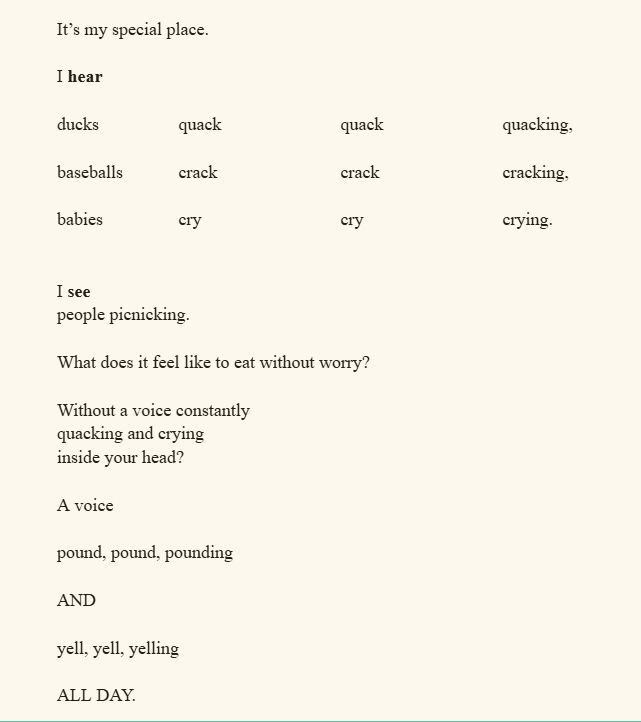

Louder Than Hunger, p. 3-6
Sentences for Combining and Imitation
Sentence sets for combining:

I hear Grandma's voice.
It is soothing.
It is bouncing around inside my head.
It is like a song.
It is like an earworm on repeat.
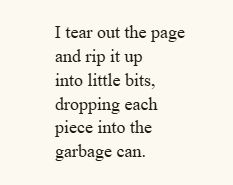
I tear out the page.
I rip it up.
I rip it into little bits.
I drop each piece into the garbage can.

I walk over to the whiteboard.
I pick up a marker.
The marker is purple.
I write "wanderlust."
Sentences for Imitation:
Because this novel is written in verse, I wanted to present these sentences in the same style. I chose them because of their structure and figurative language. They are simple, effective, and well worth student imitation.


Used this book in your classroom? Tell us how in the comments!
Want to be updated when our next book review comes out? Subscribe here for weekly posts featuring fresh book reviews with brand-new sentences and passages. Your inbox’s new favorite destination for new YA reading and writing inspiration!


Comments